
How Shilajit Is Made: Geology, Collection, and Processing Explained

How Shilajit Is Made: Geology, Collection, and Processing Explained
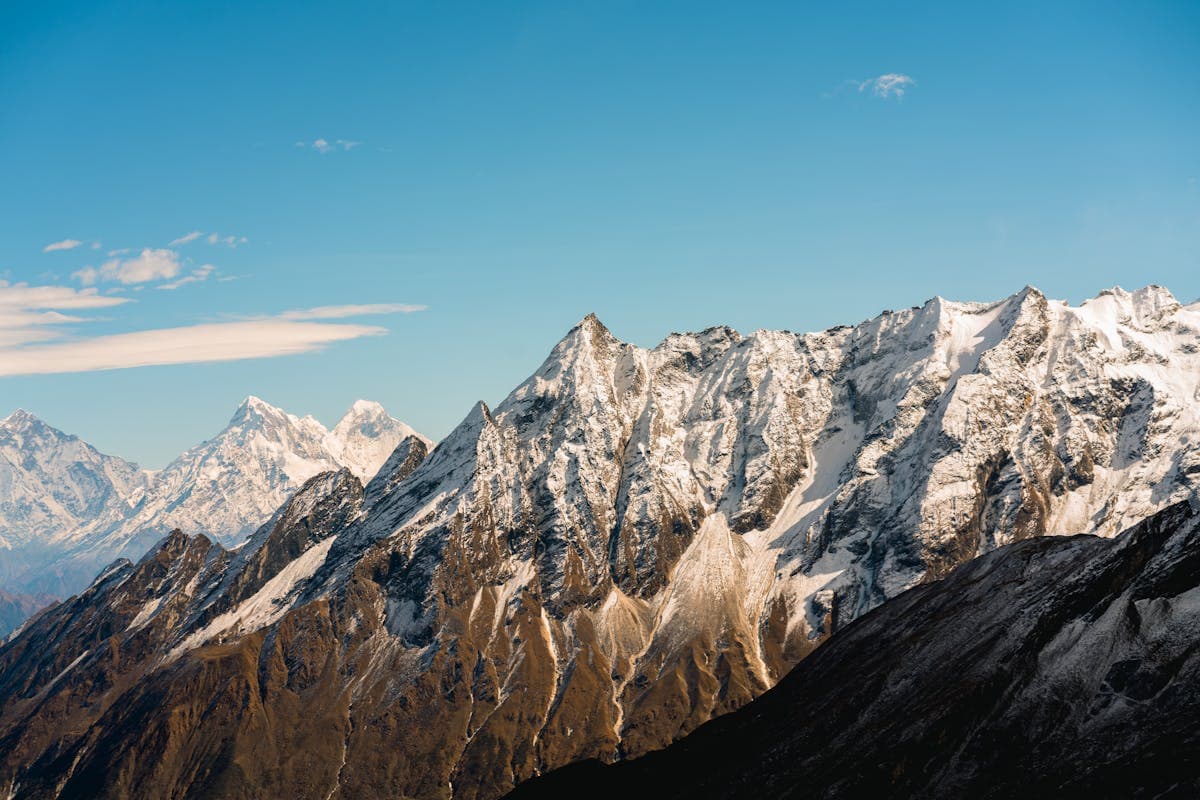
Shilajit is not manufactured. It is collected. The substance you eventually buy as a small jar of dark resin spent somewhere between several centuries and several thousand years compressing inside Himalayan or Altai rock before it ever reached human hands. Understanding the formation, collection, and purification process is the fastest way to understand why some products are real and most marketplace listings are not.
This article walks the full pipeline, from geological formation at 10,000-18,000 ft, through seasonal summer exudation collected by Hunza and Ladakh shepherds, into traditional Shodhana purification and modern lab-grade processing. If you want background on what shilajit actually is at the molecular level, the fulvic acid in shilajit deep dive covers the chemistry.
Step 1: The Plant Matter
Real shilajit starts as plants. Specifically, a mix of Himalayan species growing on or near rock faces between 10,000 and 18,000 ft. The most-cited contributors in the literature are Euphorbia royleana (a hardy alpine shrub), Trifolium repens (white clover), various mosses, and occasional lichen species. Carbonates and Evaporites 2012 (Aiello et al) characterized the plant biomarkers in Indian shilajit and confirmed Euphorbia and similar latex-producing plants as primary contributors.
These plants die, drop into rock crevices, get covered by snow, and start a slow microbial decomposition under specific conditions: low oxygen, low temperature, high pressure, mineral-rich substrate. The microbiology of those crevices is dominated by anaerobic bacteria and a small set of cold-tolerant fungi.
Over centuries, that biomass converts into a black, tar-like organic mass dominated by humic and fulvic acids, dibenzo-alpha-pyrones (the pigment fraction), and trace minerals chelated to the organic matrix. This is unprocessed shilajit. It looks like asphalt and smells like a damp cellar.
For more on the molecular profile, the fulvic acid in shilajit write-up covers the active chemistry.
Step 2: Geographic Conditions
Not every mountain range produces shilajit. Five regions have documented commercial-grade deposits:
| Region | Elevation | Notes |
|---|---|---|
| Gilgit-Baltistan, Pakistan | 12,000-18,000 ft | Highest fulvic-acid yields |
| Ladakh, India | 11,000-17,000 ft | Long traditional use |
| Bhutan | 10,000-16,000 ft | Smaller but quality output |
| Altai, Russia/Mongolia | 8,000-14,000 ft | Slightly different mineral profile |
| Caucasus, Georgia/Russia | 7,000-12,000 ft | Lower DBP content |
Himalayan and Altai sources are the two most commonly sold. The mineral profiles differ. Himalayan shilajit tends to carry more selenium and a higher dibenzo-pyrone fraction. Altai material has slightly more iron and a different humic-to-fulvic ratio. The sourcing standards page covers the regional differences in detail.
What all five regions share is the elevation. Below roughly 8,000 ft, the temperature regime, plant species mix, and rock chemistry do not produce shilajit. Anything sold as "low-altitude shilajit" or "tropical shilajit" is something else, usually leonardite (a coal-derived humic substance) or a synthetic blend. The pure shilajit explainer covers what real product looks like.
Step 3: Summer Exudation
In its compressed form inside the rock, shilajit is solid. Once the surrounding rock heats up in summer (above roughly 60 F surface temperature on rock faces with direct sun), the resin softens and starts seeping out of crevices. This is the only window when collection is practical.
The seasonal exudation runs roughly mid-June to mid-September in Gilgit-Baltistan and Ladakh, slightly shorter in Bhutan and Altai. Outside that window, the material is too hard to scrape and too dangerous to reach because of snow.
Local Hunza, Balti, and Ladakhi shepherds and herb collectors do most of the gathering. The work involves climbing exposed rock faces at altitude, identifying actively seeping cracks, and scraping the soft material off with hand tools into woven bags or leather pouches. A skilled collector might harvest 200-500 g of raw material per working day during peak exudation.
Most documented commercial supply chains run through small cooperatives in Hunza, Skardu, Leh, and similar towns. The raw material gets aggregated and sold to processors who handle the next steps.
Step 4: Raw Inspection and Sorting
Raw exuded shilajit is not yet a product. At this stage it contains:
- The active organic fraction (humic acid, fulvic acid, DBPs)
- Mineral content (often beneficial, sometimes problematic)
- Plant debris, soil, and rock dust
- Insect parts and microbial contamination
- Heavy metals leached from the substrate (lead, arsenic, mercury, cadmium)
Sorting at the cooperative level removes the obvious physical contaminants. The harder-to-remove fraction (heavy metals, soluble contaminants, microbial load) goes through purification.
This is the step where most marketplace shilajit fails. Cheap product gets dried, packaged, and sold as is. The at-home quality tests walkthrough covers the bench tests that catch unpurified material.
Step 5: Traditional Shodhana Purification
Shodhana is the classical Ayurvedic purification process. The Charaka Samhita and later texts describe it in detail. The version most still used by traditional producers runs five stages.
Stage 1: Water decoction. Raw shilajit is dissolved in roughly 3-5 times its weight of warm water (around 110-130 F). Insoluble matter (rock, sand, plant debris) sinks. Active fraction stays in solution.
Stage 2: Filtration. The supernatant is passed through fine cloth filters, traditionally muslin, sometimes folded multiple times. Modern producers use food-grade filter cloth at decreasing pore sizes.
Stage 3: Sun-drying or low-heat reduction. The filtered solution is left in shallow trays in direct sun, or reduced over very low heat (never above 140 F) to drive off water. The classical instruction is to keep the temperature low enough to "tolerate the touch of a finger" because higher heat degrades the heat-sensitive DBP fraction.
Stage 4: Triphala or cow-milk wash (optional). Traditional Shodhana in the strictest form involves repeating the dissolve-filter-reduce cycle in a triphala decoction or cow's milk to further bind and remove residual heavy-metal salts. Modern producers usually skip this and substitute lab-grade ICP-MS testing.
Stage 5: Final concentration. The reduced material is checked for moisture content (target 8-12% water), then either packaged as resin or further dried into powder.
Done properly, Shodhana removes most heavy metal contamination, eliminates microbial load, and concentrates the active fraction. Done improperly or skipped, you get raw mountain tar in a jar.
Step 6: Modern Lab-Grade Processing
Industrial producers who sell into regulated markets (US, EU, Japan) add several modern steps on top of or replacing Shodhana.
Pre-extraction testing. Raw material is tested by ICP-MS for lead, arsenic, mercury, and cadmium before processing. Batches above thresholds get rejected or blended.
Aqueous extraction at controlled temperature. Same principle as the water decoction, but with temperature held precisely at 100-120 F using jacketed reactors and continuous filtration.
Centrifugation. Removes fine particulates that cloth filtering misses.
Ultrafiltration. A membrane step that separates molecular weight fractions. This is where some producers concentrate fulvic acid above natural levels by retaining the 1,000-10,000 dalton fraction and discarding higher-weight humic acid. This is also where a "75% fulvic acid" claim usually originates. It is not the original material; it is a fraction of it.
Vacuum evaporation. Water is removed under vacuum at low temperature, preserving heat-sensitive actives.
Final QC. Per-batch testing for fulvic acid (Lamar method), heavy metals (ICP-MS), microbial load (USP plate counts), and DBP content. The lab certification and COAs page covers what a real COA should show.
Traditional Shodhana vs Modern Processing
A direct comparison:
| Factor | Traditional Shodhana | Modern Industrial |
|---|---|---|
| Heavy metal removal | Good if done properly | Excellent, verified per batch |
| Active fraction preservation | Excellent (low heat) | Excellent (vacuum) |
| Microbial control | Variable | Tight, USP-aligned |
| Yield | Lower | Higher |
| Per-batch testing | No | Yes |
| Authenticity of fraction profile | Native ratios preserved | Sometimes over-concentrated |
| Cost | Lower | Higher |
| Scalability | Limited | High |
Neither is strictly better. Properly done Shodhana with subsequent ICP-MS verification gives you a product closest to the natural material. Industrial processing with ultrafiltration gives you a more concentrated active fraction but loses some of the synergy Ghosal documented in his 1989-2006 papers.
The cleanest brands tend to combine the two: traditional Shodhana for the bulk purification, plus modern testing for verification. PakShilajit Purified, Herbs Mill Himalayan Shilajit, and NATURAL SHILAJIT 20g (DBP-Verified) follow this pattern.
Step 7: Format Conversion
After purification, the material gets converted into one of four formats:
Resin. The native form, kept at 8-12% water content, sold in glass jars. Highest fulvic-acid yield per dollar. shilajit resin covers this format. Examples: BeepWell Shilajit Resin, SHILAJOY Shilajit Resin, Himalayan Organic Shilajit Resin Extract.
Capsules. Resin or extract dried to powder, encapsulated. Convenient but typically lower active per dollar. shilajit capsules covers the format. Example: Himalayan Pure Extract Shilajit Capsules.
Liquid drops. Resin dissolved in water with stabilizers. Easier to dose but shorter shelf life. liquid shilajit drops covers this. Example: Himalayan Liquid Drops.
Honey sticks and gummies. Resin or extract blended with honey or pectin matrix. Convenience-focused. shilajit honey sticks covers sticks; shilajit gummies covers the gummy format. Example: Shilajit Gummies w/ Ashwagandha.
For broader format comparisons, the shilajit extract write-up tracks how concentration changes across formats.
How Long the Whole Process Takes
Geological formation: hundreds to thousands of years. Collection window: roughly 90 days per summer. Sorting and aggregation: 2-4 weeks. Shodhana purification: 1-2 weeks. Modern lab-grade processing: 2-4 weeks including QC. Packaging and shipping to market: 4-8 weeks.
So the resin you buy today represents material that was collected last summer at the earliest, and the geological substrate it came from is older than every recorded civilization. That is part of why genuine shilajit is not cheap.
Why Counterfeit Is So Common
The economics are unforgiving. Real raw material is hard to collect, the purification has yield losses at every step, and per-batch heavy-metal testing costs $200-400 per batch. A 30 g jar of genuine purified resin should cost $30-60 retail at minimum to be sustainable.
Anything significantly below that range is almost always one of three things:
- Unpurified raw material (heavy metal risk)
- Leonardite or other coal-derived humic substance (no DBP, no real shilajit chemistry)
- Synthetic blend (humic acid powder, food coloring, glycerin)
The pure shilajit explainer and the at-home quality tests walkthrough together cover how to spot the difference.
What Real Authentication Looks Like
Once you understand the process, the authentication tests make sense:
Water solubility. Real shilajit dissolves in warm water with mild stirring, leaving minimal sediment. Synthetic blends often clump.
Body-temp softening. A real resin softens to your finger heat within 30-60 seconds. Coal-derived fakes stay hard or get oily.
Flame test. A small amount on a metal spoon held over a flame should bubble and dry without producing ash or black smoke. Synthetic blends burn or leave residue.
COA reading. Lamar-method fulvic acid 15-22%, DBP above 0.3%, heavy metals all below USP limits. The lab certification and COAs page goes deeper.
Closing Picture
What ends up in a 30 g jar of clean Himalayan resin is the result of plant matter that fell into a rock crevice during the era of the Mughal Empire, microbially decomposed across centuries, exuded one summer afternoon at 14,000 ft, scraped off the rock by a Hunza shepherd, dissolved and filtered in a cooperative kitchen, tested on a mass spectrometer in a Lahore or Mumbai lab, and reduced under vacuum in a stainless steel reactor before being poured into glass and shipped to your door.
The process is messy, slow, and almost impossible to scale cheaply. That is the whole reason quality matters. Real shilajit is not difficult to identify once you know what was supposed to happen on the way to your jar.
If you want a starter purchase that respects this process, Herbs Mill Himalayan Shilajit, Pure Himalayan Organic Resin, or BetterAlt Himalayan Shilajit are reasonable defaults. For the wider buying decision, the best shilajit brands roundup applies the standards above across the market.
Medically Reviewed Content
This article has been written and reviewed by Paula Kessler, a certified nutritionist and Ayurvedic wellness expert with over 15 years of experience in natural medicine. All information is based on peer-reviewed scientific research, traditional medical texts, and clinical evidence.
Our content follows strict editorial guidelines and is regularly updated to reflect the latest research. We maintain the highest standards of accuracy and transparency in all health information we publish.
Ready to Experience Pure Shilajit?
Check out our recommended products and start your wellness journey today.
View Recommended ProductsRelated Articles
Shilajit Glossary A to Z: Every Term You'll See on Labels
Every term you'll meet shopping for shilajit, defined in plain language with the practical context that matters when you read labels and COAs.
Shilajit Myths Debunked: 14 Claims That Don't Survive the Lab
Fourteen of the most common shilajit myths fact-checked against published research, COA reality, and basic chemistry.
Shilajit Meaning: Sanskrit Etymology, Charaka and Sushruta References, and Geological Origin
What shilajit means in Sanskrit (rock-juice, conqueror of mountains), where the word appears in Charaka Samhita and Sushruta Samhita, and how the geology backs the etymology.