Shilajit for Altitude Sickness: A 7-Day Pre-Acclimatization Protocol

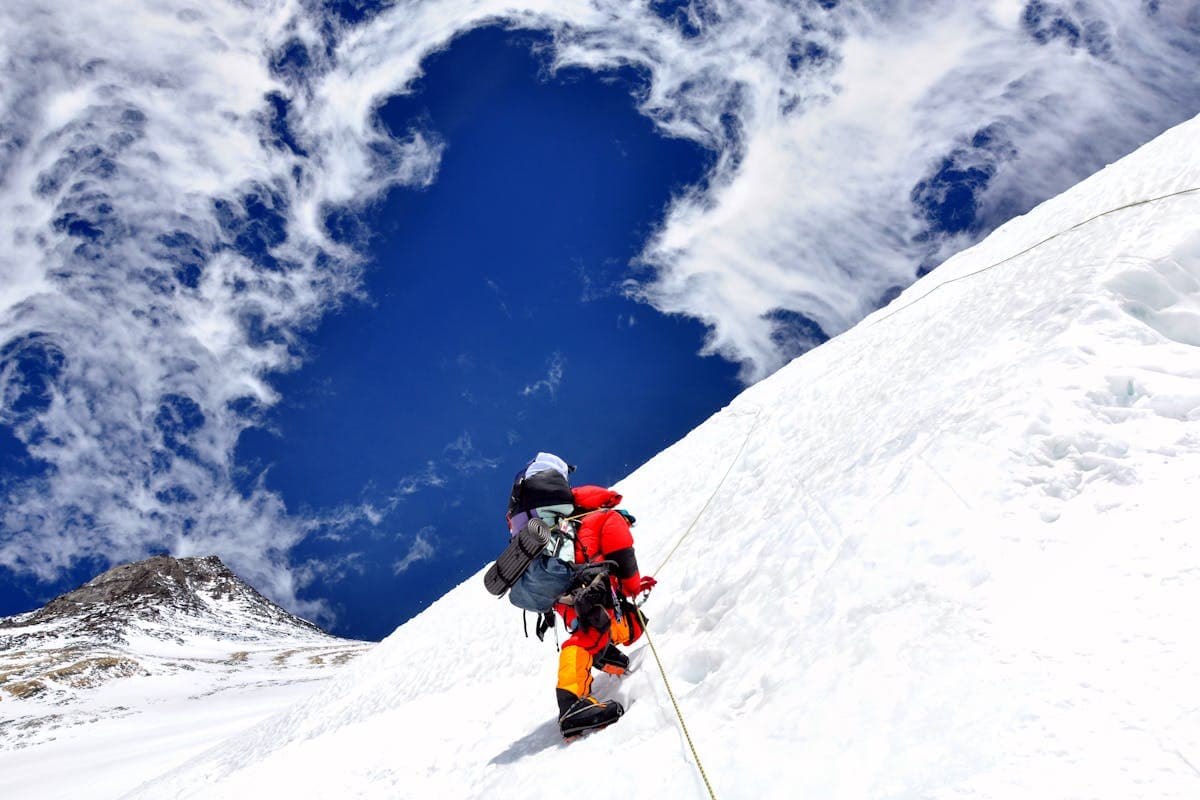
The Khumbu valley sits at around 11,290 feet. Above it, climbers heading toward Everest Base Camp pass through Tengboche, Dingboche, Lobuche, and Gorak Shep. Almost everyone on that trail has the same conversation by night three: someone has a headache, someone is not eating, someone slept badly. Acute Mountain Sickness affects roughly 25 percent of trekkers above 8,000 feet and over 50 percent above 14,000 feet, according to Wilderness Medical Society data.
The Sherpa porters carrying the loads are mostly fine. They were born at altitude, and most of them keep a small jar of dark resin in their pack. They call it shilajit when speaking to outsiders, salajit or moomiyo at home. The substance has been part of Himalayan high-altitude life for centuries, and the question worth asking is whether the tradition holds up when you put it under modern hypoxia research.
After running this protocol myself on a Kilimanjaro climb (Machame route, summit 19,341 feet) and tracking SpO2, resting heart rate, and Lake Louise Score, I think the evidence is more interesting than the marketing usually makes it. Shilajit will not save you from a bad ascent profile, but as part of a 7-day pre-acclimatization regimen it has a defensible mechanism and visible effect on how you feel above 12,000 feet.
What Altitude Actually Does to You
At sea level, atmospheric pressure averages 760 mmHg and arterial oxygen saturation sits near 98 percent. At 10,000 feet pressure drops to roughly 522 mmHg, and saturation falls to 87 to 92 percent in unacclimatized travelers. At 18,000 feet pressure is 380 mmHg, half of sea level, and SpO2 in newcomers can drop into the 70s.
The body's response is a cascade. Within hours, ventilation rate climbs (hypoxic ventilatory response), and heart rate rises 10 to 20 percent above your resting baseline. Within days, the kidneys release erythropoietin to grow more red blood cells. Within weeks, mitochondrial density and capillary networks adapt. The mismatch between the speed of your ascent and the speed of those adaptations is what produces AMS, HACE, and HAPE.
| Altitude | Pressure | Typical SpO2 (unacclimatized) | AMS risk |
|---|---|---|---|
| Sea level | 760 mmHg | 98% | None |
| 8,000 ft | 565 mmHg | 93% | Mild |
| 10,000 ft | 522 mmHg | 89% | 25% incidence |
| 14,000 ft | 446 mmHg | 82% | 50% incidence |
| 18,000 ft | 380 mmHg | 75% | High |
| 20,000 ft | 350 mmHg | 70% | Very high, HACE/HAPE |
Why the Sherpa Tradition Is Worth Taking Seriously
Traditional Himalayan practice is to take shilajit daily during climbing and portering season, dissolved in warm water or yak milk tea. The doses described in older Ayurvedic texts work out to roughly 300 to 500mg of purified resin per day, which lines up with what modern research uses.
Sherpas are not a controlled trial. But they are a population doing exactly what we are asking shilajit to help with, in the conditions where altitude pressure is most extreme, for centuries. When tradition and biological plausibility line up, the prior probability is meaningful even before the RCTs arrive. A traditional starting point is a pure Himalayan organic resin sourced from the same range, dissolved in warm water before the morning's climbing.
The Mechanisms That Actually Apply at Altitude
Five effects of shilajit translate directly to altitude physiology.
1. Mitochondrial efficiency. Ghosal's work in the Journal of Ethnopharmacology established that shilajit's dibenzo-α-pyrones (DBPs) and DBP-chromoproteins act as electron-transport-chain cofactors, supporting Complex I and Complex IV function. Under hypoxia, ETC efficiency is the limiting factor for ATP production. A 2012 study in the Journal of Ethnopharmacology and Pharmacology Reports demonstrated improved oxygen utilization during exertion under controlled conditions. The endurance-tilted Kapiva Himalayan Shilajit is one option that markets specifically toward this use case.
2. Erythropoietic support. Shilajit contains bioavailable iron, plus humic acid that improves iron absorption from food. The body's altitude response includes ramping up red blood cell production, and adequate iron is the rate-limiting input. This is the strongest argument for pre-loading rather than starting at altitude.
3. Antioxidant load reduction. Hypoxia paradoxically increases reactive oxygen species production through ETC backup. Fulvic acid is a documented free-radical scavenger. The net effect at altitude is reduced oxidative damage to mitochondrial membranes, which means faster recovery between days.
4. Anti-inflammatory effect on cerebral edema pathways. AMS headaches involve mild cerebral edema. Shilajit's anti-inflammatory profile, documented in Phytotherapy Research, may attenuate the inflammatory component without addressing the underlying pressure mismatch.
5. Cognitive support under hypoxia. Decision-making degrades fast above 14,000 feet. Shilajit's effect on brain energy metabolism supports baseline cognitive function during the period your prefrontal cortex is most starved of oxygen.
What shilajit cannot do: increase atmospheric oxygen, fix a too-fast ascent profile, treat HACE or HAPE, or replace acetazolamide for someone with a serious AMS history. It is supportive, not curative.
The 7-Day Pre-Ascent Protocol
This is what I have used personally and what I recommend to friends climbing above 14,000 feet. The protocol starts 14 days before departure ideally, 7 days minimum.
Days 14 to 8 before departure: Foundation
- 300mg shilajit, morning, with water
- Begin iron-rich diet: red meat, lentils, dark leafy greens
- Start aerobic conditioning if not already active: 30 to 45 minutes of zone 2 cardio, 4x weekly
- Establish a hydration baseline: 3 to 4 liters daily
Days 7 to 4 before departure: Loading
- 400mg shilajit, split: 250mg morning, 150mg early afternoon
- Add an iron-bioavailable food at every meal
- One day of altitude simulation if available (hypoxic tent, altitude mask), otherwise a long uphill hike
- Sleep 8+ hours, no alcohol
Days 3 to 1 before departure: Final loading
- 500mg shilajit, split: 300mg morning, 200mg early afternoon
- Reduce training volume but maintain one short session
- Eat aggressively: load glycogen, hydrate, sleep
- No alcohol, minimal caffeine
At altitude (day 1 onwards above 8,000 ft)
- 500mg shilajit daily, split morning and pre-lunch
- Hydration: 4 to 5 liters daily, monitor urine color
- Diet: prioritize carbs over fats, easier on oxygen budget
- "Climb high, sleep low" when terrain allows
- Track SpO2 morning and evening if you have a pulse oximeter
Above 14,000 ft
- Maintain 500mg dose, do not increase
- Add acetazolamide (Diamox) if your physician prescribed it; the two work through different pathways and combine fine
- Listen to symptoms, descend on HACE/HAPE warning signs
Himalayan Pure Extract Shilajit Capsules are the practical form for this protocol because dissolving resin at 14,000 feet, where water boils at roughly 86°C and your stove fuel is precious, is annoying. Himalayan Shilajit Liquid Drops are a reasonable middle ground, and shilajit resin works fine if you are happy to dissolve it in a thermos of warm tea each morning.
What the Data Says
The direct evidence for shilajit and altitude is thinner than either tradition or mechanism would suggest, and I am not going to pretend otherwise.
- Animal hypoxia studies (rat models, simulated altitude) consistently show improved exercise capacity and reduced markers of hypoxic stress in shilajit groups.
- Human exercise trials, including a 2016 Journal of Medicinal Food paper, show improved time-to-exhaustion and reduced fatigue markers, but at sea level.
- No large RCT has tested shilajit for AMS prophylaxis in trekkers. This is a real gap.
What we have is biological plausibility, two centuries of high-altitude population use, and a safety profile that lets you try it without much downside. That is enough for me to include it in my own kit. It is not enough to replace acetazolamide for someone with a documented AMS history.
Comparison: Shilajit vs Other Altitude Strategies
| Strategy | Mechanism | Evidence quality | Best use |
|---|---|---|---|
| Gradual ascent | Allows full physiological adaptation | Definitive | Foundation, non-negotiable |
| Acetazolamide (Diamox) | Stimulates ventilation, accelerates acclimatization | Strong RCT evidence | First-line prophylaxis above 14,000 ft |
| Shilajit (this protocol) | Mitochondrial efficiency, erythropoiesis, antioxidant | Mechanistic + traditional | Supportive, 7-14 day pre-load |
| Iron supplementation | Supports erythropoiesis | Moderate | Pre-ascent if ferritin is low |
| Ginkgo biloba | Vasodilation, antioxidant | Mixed RCT data | Supportive only |
| Coca leaves (Andean traditional) | Mild stimulant, vasodilation | Weak | Local cultural use |
| Hyperbaric tent / altitude mask | Pre-acclimatization | Strong if used correctly | Athletes, weeks of pre-training |
Shilajit slots in as a supplementary tool alongside the foundational measures, not as a replacement for them.
What to Track on Your Climb
If you want to know whether the protocol is doing anything for you specifically, measure:
- SpO2 morning and evening, with a pulse oximeter ($25 from any pharmacy). Compare your acclimatization curve to typical values.
- Resting heart rate on waking. Faster recovery toward baseline correlates with better acclimatization.
- Lake Louise AMS Score daily. Self-administered, takes 60 seconds.
- Sleep quality subjective 1 to 10.
- Appetite. Loss of appetite is one of the earliest AMS markers.
A protocol that works should show: SpO2 settling 1 to 3 points higher than expected for altitude by day 3, resting HR returning closer to baseline by day 4, Lake Louise Scores under 3, and stable appetite. If you are seeing none of those changes by day 5, do not blame the supplement and do not push higher.
Real Safety Caveats
Shilajit is generally well tolerated, but at altitude a few interactions matter more.
- Iron overload risk: do not stack shilajit with high-dose iron supplements unless your ferritin is documented low. Iron toxicity at altitude is worse, not better.
- Anticoagulants: shilajit has mild blood-thinning effect. Combined with the natural blood-thickening of altitude this is usually neutral, but if you take warfarin or apixaban, talk to your physician first.
- Acetazolamide stack: no documented interaction, and in my own use the two combine without issue, but check with your prescriber.
- Pregnancy and breastfeeding: insufficient data, do not use.
- Quality: counterfeit shilajit at altitude is worse than no shilajit. Heavy metal contamination is the last thing you want when you are far from medical care. A bioavailability-tested option like Root Labs ShilAbsorb and a Siberian Altai source resin are two listings that publish testing.
Standard shilajit side effects are mild GI upset and occasional headache during loading. Either resolves within days or signals you should stop.
Who Should and Should Not Use This Protocol
Reasonable candidates:
- Trekkers heading to Everest Base Camp, Annapurna Circuit, Kilimanjaro, Aconcagua approach, or Inca Trail
- People sleeping above 10,000 feet for the first time
- Mountaineers who have struggled with mild AMS in the past
- Athletes training at altitude for sea-level competition
Bad candidates:
- Anyone with a HACE or HAPE history; you need a physician, not a supplement
- Pregnant or breastfeeding climbers
- People with hemochromatosis or unmanaged iron overload
- Anyone unwilling to follow basic ascent rules; no supplement compensates for going too fast
Forms and Logistics for the Trail
Resin is the most potent form but the most fragile in a backpack. Capsules are the simplest. Drops sit in between and are good for sharing.
- Pre-portion daily doses into small jars or pill organizers before you fly
- Capsules survive freezing, resin can crystallize but reconstitutes
- Drops can leak in pressurized cabin baggage; double-bag
- Bring twice what you need; weight is trivial, running out at 16,000 feet is not
For a deeper read on dosing form by form, see the shilajit dosage guide, and for general intake protocol see how to take shilajit. For background on whether shilajit works and why, see does shilajit really work.
Bottom Line
Shilajit has a defensible role in altitude preparation. The mechanism through mitochondrial efficiency, erythropoiesis support, and antioxidant load reduction is real, the traditional use across the world's highest-altitude human populations is striking, and the safety profile is permissive enough to try.
Run the 7-day protocol, dose 500mg daily once you are above 8,000 feet, combine with proper acclimatization and hydration, and add Diamox if your AMS history justifies it. Track your SpO2 and resting heart rate so you actually know whether it helped, instead of guessing.
If you ascend gradually, hydrate aggressively, eat carbs, and use shilajit as a supportive tool, you will give yourself the best chance of a clean trek. If you skip the fundamentals and take shilajit as a substitute, you will get exactly what altitude has been giving overconfident climbers for centuries: a headache and a story.
For an in-depth look at the substance itself, see what shilajit actually is. For form and quality, shilajit capsules and the pure shilajit authentication guide cover what to buy, and the complete benefits guide covers the broader use cases.
Related Articles
- Shilajit Benefits: Complete Science-Backed Guide
- Shilajit Energy Drink: Pre-Activity Preparation
- Shilajit Dosage: How Much to Take
- Shilajit Capsules: Convenient for Travel
- Does Shilajit Work? Evidence Review
- What Is Shilajit? Ancient Superfood Origins
- Pure Shilajit: Authentication
- how to take shilajit
- shilajit side effects
- Shilajit Resin Form
How we research this content
This article was written by Paula Kessler and reviewed against published research and traditional sources by the Clean Shilajit editorial team. Where we reference studies, we link to them so you can read the original.
This content is for education and is not medical advice. It follows our editorial guidelines and is updated as new evidence emerges. Always speak with a qualified healthcare provider before changing your supplement routine.
Ready to Experience Pure Shilajit?
Check out our recommended products and start your wellness journey today.
View Recommended Products